Both approaches work. Gadgets win for renters and single jobs. One system wins when you want the whole building working together, with one app and one firm responsible. Here's the honest comparison.
Two ways to make a home smart
You can buy gadgets one at a time: a video doorbell here, some smart bulbs there, a learning thermostat, a voice assistant to tie it together. Or you can install one system that runs the whole building. If you're not sure what that second option looks like, start with What is Loxone?
Both approaches work. The question is what you want to end up with.
Where gadgets are the right call
If you're renting, gadgets are the only sensible option, because they move out with you. If you have one specific problem to solve, seeing who's at the door, say, or turning the heating on before you're home, a single gadget does that well for little money. And if you just want to find out whether smart features suit the way you live, a few bulbs and a speaker are a cheap way to learn.
We fit whole-building systems for a living, and we'd still tell you: for those cases, buy the gadget.
Where the piecemeal approach breaks down
The problems start when the collection grows.
- Every brand has its own app. The doorbell doesn't know what the heating is doing. The bulbs don't know the alarm is set. You end up as the integration, tapping between apps.
- Automations go only as far as each brand allows. If two products were never designed to talk to each other, no amount of tinkering makes them cooperate reliably.
- Many gadgets depend on the maker's cloud. When the server has a bad day, or the maker drops support for your model, features stop working, and there's little you can do about it.
- Subscriptions stack up. Individually small, collectively a standing charge on your own house.
- Nobody is accountable for the whole. When something misbehaves, each maker points at the others.
What a single system does differently
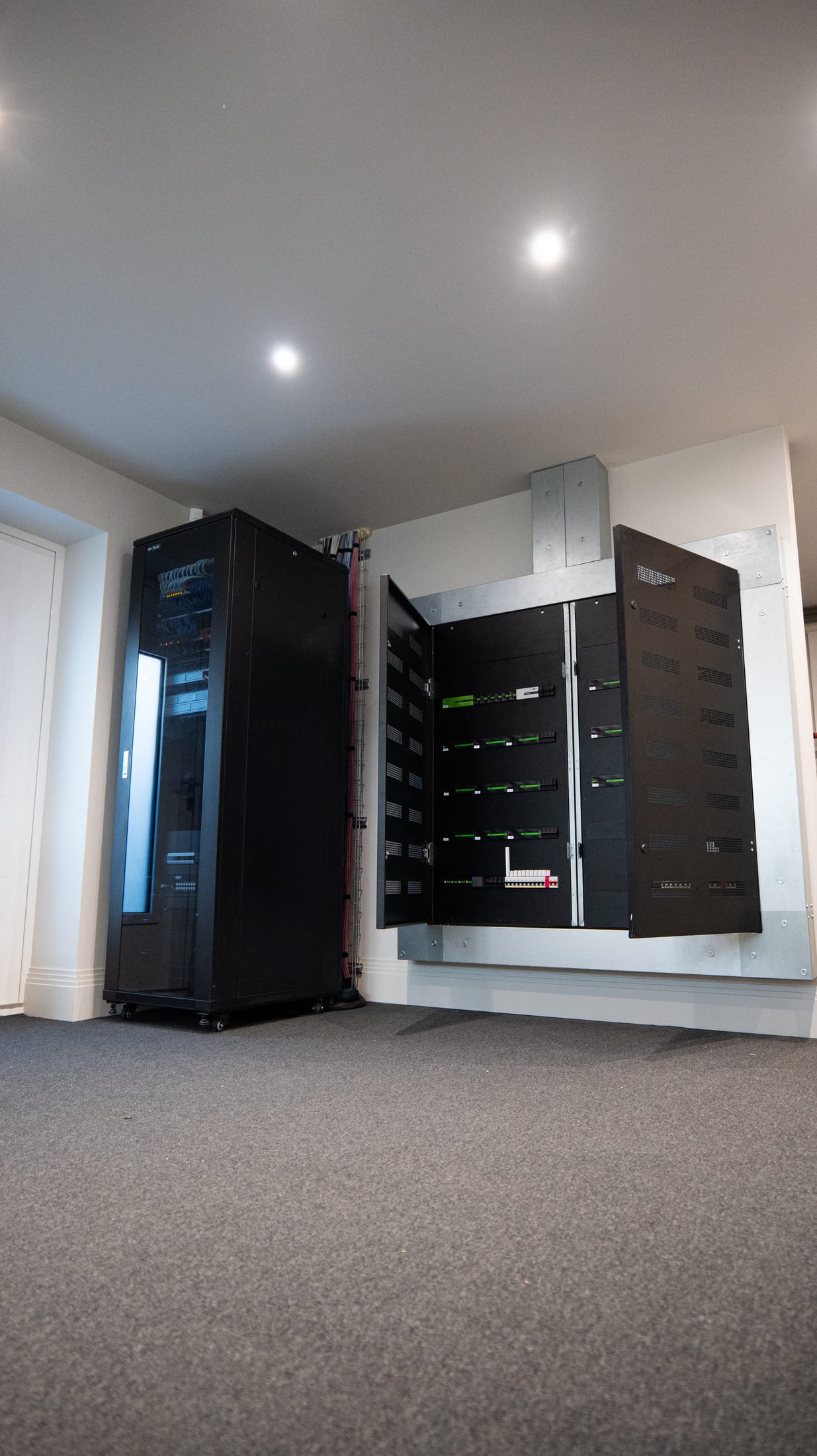
A Loxone system takes the opposite approach. One controller runs the whole building, so the same presence sensor that switches your lights can drive your heating and your alarm. Decisions happen locally, inside your building, not on someone's server, which is why the system carries on working without the internet. There's one app for the whole house and no subscription for the core system.
And because it's designed, programmed and commissioned for your building by a named installer, one firm is responsible for the lot. If something's wrong, you know exactly who to call.
The trade-offs, plainly
| Separate gadgets | One system | |
|---|---|---|
| Getting started | Cheap, DIY, one gadget at a time | Professionally designed and installed |
| Day to day | One app per brand | One app for the whole house |
| Automation | What each brand allows | What the building needs |
| Internet down | Cloud-dependent features stop | Carries on as normal |
| Subscriptions | Often, and they add up | None for the core system |
| When it breaks | Each maker blames the others | One firm responsible |
What about cost?
A designed system costs more up front than a handful of gadgets. There's no way round that, and we won't pretend otherwise. The honest answer on the number is that it depends on the size of the building and what you want the system to do. Send us your floor plans and a short brief, and we'll come back with an estimate broken down into clear sections, a figure you can plan around.
If you've already got a system someone else fitted and it isn't right, that's a different conversation: our rescue and audit service covers exactly that.